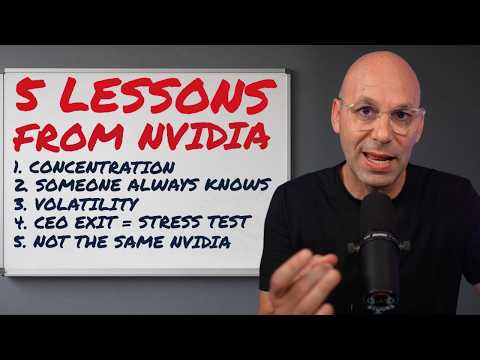
he central narrative of this episode is the ongoing crisis surrounding NVIDIA CEO Jensen Huang, whose alleged relationship with a suspected Chinese intelligence asset has created a national security dilemma. The market's reaction suggests that investors are prioritizing NVIDIA's technological dominance over the personal and geopolitical risks associated with its leadership. While some political figures, including Senator Kevin Cramer, have called for Huang's resignation due to potential extortion risks, the company continues to operate with business-as-usual, and prediction markets currently reflect a low probability of his departure before next summer.
Parallel to the corporate scandal is a significant shift in the AI infrastructure landscape. The hosts highlight how the 'CUDA moat'—NVIDIA's proprietary software advantage—is being rapidly eroded. The time required to optimize AI models for AMD hardware has plummeted from months to days, signaling a major shift in the competitive landscape. This development, combined with the rise of companies like Anthropic, suggests that the AI compute market is becoming more fungible, which could eventually challenge NVIDIA's pricing power and market share.
Despite these challenges, the broader AI trade remains robust. Investors are increasingly viewing market volatility as a resolution of uncertainty rather than the bursting of a bubble, a perspective championed by Jeff Yass, who argues that market prices are the best available guesses under uncertainty. This sentiment has helped the S&P 500 and tech stocks recover from recent sell-offs, as demand for compute continues to outpace supply.
Finally, the episode pivots to a debate on founder productivity and the necessity of hobbies. The hosts argue that the best founders are often defined by a singular obsession with their company, especially in the early stages. A true hobby, according to the hosts, must be non-monetizable, unrelated to professional gain, and require a level of deep commitment that makes the participant a regular at a specialty store. This framework helps distinguish between genuine personal passions and the networking-heavy 'hobbies' often cited by high-profile CEOs.