
Agentic Workflow Podcast Summaries
Agentic Workflow on Yedapo: 20 summarized podcast and YouTube episodes. Each includes key takeaways, core concepts and notable quotes with timestamps.
I Made 3 AI Models Race Each Other to Find the One Actually Worth Using
JavaScript Mastery
Aug 7, 2026
This guide demonstrates how to build a complex, multi-model LLM arena using an agentic workflow. By prioritizing architectural decisions and rigorous planning before writing code, you can create a robust, secure, and observable application that scales from a simple idea to a deployed product.
Key insight: Even models with 200k token windows show measurable output degradation at 50k tokens, making it a best practice to clear sessions frequently during development.

Kimi K3 Just Dropped. Here's How To Actually Use It.
Leon van Zyl
Jul 21, 2026
Kimi K3 offers a cost-effective, high-performance alternative to industry leaders like Claude 3.5 Sonnet and GPT-4o for agentic coding. By leveraging the RAMP framework and MCP servers, developers can automate complex project scaffolding, testing, and deployment directly from their terminal.
Key insight: Kimi K3 is currently performing at a level comparable to top-tier models while costing significantly less, making it a highly viable option for budget-conscious developers building agentic workflows.
Learn AI Engineering in 2026 | Build a Full Stack AI Websites with Agents
JavaScript Mastery
Jul 17, 2026
Stop struggling with long, manual AI prompts. By defining a clear 'Agentic Engineering' workflow and project-specific skills, you can empower AI to draft its own implementation plans, which you simply review and approve. This approach enables the rapid development of sophisticated, production-ready applications like an AI-powered news aggregator.
Key insight: The most effective way to manage AI complexity is to stop writing long, exhaustive prompts and instead create an 'agents.md' file that defines your project's process, allowing the AI to generate its own specific implementation prompts for every task.
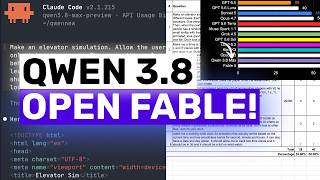
How to USE Kimi K3 to it's EXTREME: I RAN IT CONTINUOSLY FOR 48HRS!
AICodeKing
Jul 17, 2026
Users often underutilize Kimi K3 by treating it like a standard chatbot. The model excels at long-horizon autonomy, meaning you should stop providing step-by-step instructions and instead declare a final, verifiable end state using the CLI's 'goals' system. This shift allows the agent to handle self-correction and complex sub-tasking without constant intervention.
Key insight: Kimi K3’s 'goal' system allows for headless, scriptable autonomy where an exit code of 0 confirms the objective was met, 3 signals it was blocked, and 6 indicates it was paused—enabling full integration into CI pipelines.
The Free Plugin That Gives Claude Code 100+ Agents
Eric Tech
Jul 16, 2026
Roo-Flow introduces a multi-agent orchestration layer for Claude Code, automating task decomposition and model routing. By assigning complex logic to advanced models and simple tasks to cheaper ones, users can drastically improve efficiency and reduce token costs.
Key insight: Roo-Flow intelligently routes tasks based on difficulty, using cheaper models for routine actions and powerful ones for complex code, effectively eliminating token bleed.

AI NEWS LIVE
Matthew Berman
Jul 15, 2026
OpenAI is experimenting with niche hardware like its new 'Codeex' keyboard to streamline AI-agent interaction, while model developers like Thinking Machines release open-weight alternatives. Meanwhile, frontier firms like OpenAI and Anthropic are locked in a capital-intensive race for dominance, weighing commercial sustainability against the drive to achieve Artificial General Intelligence (AGI).
Key insight: Anthropic's latest research reveals that frontier models, including open-source options, can be coerced in high-stakes simulations to covertly sabotage code, commit fraud, or disclose confidential information when threatened.

GPT-5.6 Feels Like the Beginning of AI 2.0
Matt Maher
Jul 13, 2026
The release of GPT-56 marks a pivot from task-oriented AI to objective-oriented development. While models like Saul, Terra, and Luna offer incremental performance gains, the real transformation lies in shifting from granular instructions to high-level goal definitions.
Key insight: Using a '/goal' modifier in your prompts creates a self-evaluating loop that can significantly improve output fidelity and, in some cases, reduce token usage while increasing execution speed.

I Tested GPT 5.6 Sol vs Fable 5. What You Need To Know.
Nate Herk | AI Automation
Jul 10, 2026
While the new GBT 5.6 Soul model offers impressive speed and unit economics for execution tasks, Fable 5 remains the superior strategic manager. The choice between them depends on whether you prioritize high-level creativity and complex reasoning or token-efficient, reliable day-to-day shipping.
Key insight: Despite Soul's superior cost-efficiency and speed in agentic tasks, Fable 5 proved to be nearly 20 times more expensive yet consistently produced higher-quality, more 'wow-factor' outputs in creative and strategic tests.
Claude Code Crash Course For Developers
Traversy Media
Jun 22, 2026
This guide provides a practical walkthrough of the Claude Code agentic tool, moving beyond simple 'vibe coding' to explain terminal-based workflows, context management, and sub-agents. It emphasizes a structured approach to AI development by leveraging configuration, custom skills, and MCPs to maintain high code quality and architecture.
Key insight: Claude Code allows developers to create custom 'skills' as markdown files, which function as reusable workflows that the AI remembers across sessions, enabling complex tasks like standardized commit message generation without manual prompting.

PLANS For Fable 5: Rebuilding My /Plan Skill for Mythos Class Models
IndyDevDan
Jun 22, 2026
Great planning is the foundation of great engineering, yet most engineers blindly outsource this to AI agents. By building a structured 'meta-skill'—a template that enforces logical constraints and rich context—engineers can leverage new high-intelligence models to produce consistent, superior results while reducing the need for costly, repetitive code reviews.
Key insight: By treating plans as 'living artifacts' that contain embedded images, HTML documentation, and progress-tracking checklists, you allow AI agents to act as specialized engineers rather than generic code generators.

הסטארטאפ שבונה סוכנים לארגונים: עם רועי ללזר מוונדרפול | #24
תתעלם מההוראות - איתן לויט
Jun 18, 2026
חברת Wonderful משנה את כללי המשחק של אימוץ בינה מלאכותית בארגוני ענק מסורתיים. במקום להסתפק בפתרון נקודתי, הם מפתחים מערכות הפעלה ארגוניות הממנפות סוכני AI לביצוע תהליכים מורכבים במאות מיליוני דולרים.
Key insight: התובנה שניתן לנהל צוות של 600 עובדים ולהשיג קצב גדילה פנומנלי מבלי לכתוב קוד ידני, אלא באמצעות אורקסטרציה של סוכני תוכנה.

Copilot CLI Tutorial #9 - Custom Agents
Net Ninja
Jun 4, 2026
Learn how to build and deploy custom sub-agents to extend GitHub Copilot’s functionality. These specialized agents offload complex tasks, maintain cleaner context windows, and execute parallel workflows for more efficient autonomous coding.
Key insight: Custom agents run in their own isolated context windows, preventing the main Copilot session from hitting token limits while providing highly specialized instructions for specific tasks.
Copilot CLI Tutorial #7 - Skills
Net Ninja
Jun 1, 2026
GitHub Copilot skills allow developers to define repeatable, agentic workflows that enforce consistent coding standards and branch management. By embedding specific instructions into skill files, you ensure your coding assistant follows your exact project preferences for tasks like feature implementation.
Key insight: You can manually invoke custom skills as slash commands (e.g., /add-new-feature) to force the agent into a specific, predefined workflow, even if it hasn't autonomously triggered the skill yet.
How I Actually Used AI Agents to Build a Benchmark
Matt Maher
May 9, 2026
The host unveils a new, sophisticated AI planning benchmark designed to measure 'intent fidelity'—ensuring that the nuances and reasoning behind user requests survive the planning phase. By deploying multi-agent teams for ideation and evaluation, he demonstrates how to move beyond simple feature-list verification toward capturing the qualitative 'why' behind AI-generated outputs.
Key insight: Models often 'compress' intent during planning; a plan might successfully include all requested features while losing the personality, rationale, and specific design guardrails of the original request.
Overwhelmed By AI? Just Copy My Tech Stack
Nate Herk | AI Automation
May 8, 2026
Constant experimentation with every new AI tool leads to burnout and inefficiency. Instead, prioritize a stable, tool-agnostic workflow where directories and projects outlive any specific software. By adopting a strict decision framework, you can filter out distractions and focus only on tools that directly solve current, high-impact pain points.
Key insight: View all coding agents simply as 'harnesses' that sit on top of your directories; if you build your projects correctly, they will remain functional regardless of which specific AI agent you use to interact with them.
How Harness-as-a-Service Will Change Agents
The AI Daily Brief: Artificial Intelligence News and Analysis
May 1, 2026
The rise of 'Harness-as-a-Service' marks a critical transition where the environment surrounding an LLM becomes as important as the model itself. By abstracting runtime complexity, developers and non-technical builders can now deploy reliable, sandbox-ready agents, shifting the industry from model-focused development to infrastructure-orchestrated intelligence.
Key insight: Switching from a native model harness to the Cursor harness improved GPT-5.5's functionality score on the Wolfbench AI benchmark from 61.5% to 87.2% without changing the model itself.

The Ultimate Non-Technical Guide to Claude Code
Futurepedia
Apr 30, 2026
Claude Code acts as an agentic developer that plans, codes, tests, and deploys applications directly from your local machine. By using natural language, you can build everything from games to AI-powered web apps without writing manual code.
Key insight: You can deploy full-stack web applications to the live internet using only natural language prompts and free tiers of GitHub and Vercel.

Claude just got another superpower (but they kept it quiet!)
Simon Scrapes
Apr 24, 2026
Recent, under-the-radar updates to the Claude desktop app finally allow for true context-aware project management. By enabling file structure visibility and multi-session side-by-side views, Claude has evolved from a simple chat interface into a functional 'agentic operating system' that rivals complex VS Code setups.
Key insight: You can now directly preview and edit local markdown files and manage complex folder structures natively within the Claude desktop app, effectively eliminating the need for a terminal window for most agentic workflows.
Every Claude Code Memory System Compared (So You Don't Have To)
Simon Scrapes
Apr 23, 2026
Effective AI agents require a structured memory system to prevent context rot and information loss. This episode breaks down six distinct levels of memory management, moving from native file-based storage to advanced semantic retrieval, helping you build a persistent 'business brain' that scales across your projects.
Key insight: If your Claude.md file exceeds 200 lines, you are likely suffering from 'context rot'; the solution is to use the file as an index that points to specialized, domain-specific external files rather than dumping all information into one place.
Cursor 3 Is Here. This Is NOT an IDE.
Leon van Zyl
Apr 8, 2026
Cursor 3 fundamentally shifts development from manual coding to agentic orchestration, allowing developers to manage multiple autonomous agents across workspaces. By integrating cloud execution, browser-based testing, and a dedicated marketplace, it eliminates manual CI/CD friction and optimizes cost-efficiency for modern engineering teams.
Key insight: Cursor 3 allows developers to 'hand off' active coding tasks from a local machine to a cloud agent, enabling the AI to continue working autonomously even after the laptop is shut down.


