
Agentic Workflows Podcast Summaries
Agentic Workflows on Yedapo: 50 summarized podcast and YouTube episodes. Each includes key takeaways, core concepts and notable quotes with timestamps.

Hermes Agent: From Setup to 24/7 AI Assistant (Complete Guide)
Leon van Zyl
Jul 23, 2026
Hermes Agent offers a powerful, persistent AI assistant that learns your preferences and automates workflows across platforms. By deploying it to a VPS, you can maintain a 24/7 connection accessible via web, desktop, and mobile messaging apps like Telegram.
Key insight: You can delegate complex, recurring tasks—like morning news reports or data logging—to an AI agent that manages its own cron jobs and skills, even when your local PC is powered off.

Fable vs GPT-5.6 Wasn’t Even Close
Matt Maher
Jul 20, 2026
While both Fable and Soul can build functional applications from design documents, their autonomy levels differ drastically. Fable excels at independent execution, whereas Soul requires intensive, iterative hand-holding to reach a production-ready state.
Key insight: Building a Parcheesi game with Soul required 65+ messages and 14 hours of active work, compared to just 6-7 messages and 3.5 hours for a similar project using Fable.

FORGET Loop Engineering. Agentic Engineering is about THIS
IndyDevDan
Jul 13, 2026
The term 'loop engineering' obscures the reality of building scalable AI systems. Engineers must treat AI as one component in a trio of value creation: agents, code, and human oversight. By building 'software factories' that orchestrate these actors into deterministic workflows, engineers can achieve reliable, repeatable, and scalable production-grade outcomes.
Key insight: Code is the most reliable actor in an agentic system because it runs consistently at zero token cost and at the speed of light; never over-leverage LLMs when deterministic code can handle the task.

GPT-5.6 SOL is HERE
Matthew Berman
Jul 9, 2026
GPT 5.6 represents the peak of the current training run, outperforming predecessors like Opus 4.8 with superior logic and cost-efficiency. By using this frontier model for high-level planning and orchestration while delegating execution to smaller models like Terra or Luna, users can maintain top-tier output quality while drastically reducing per-task operational costs.
Key insight: GPT 5.6 is so efficient that the host successfully offloaded the creation of a Minecraft clone and a full Excel clone to the model using only a single-sentence prompt for each, letting it run autonomously for six days.
Fable 5 Is BACK… But GPT 5.6 Is Almost Here
Riley Brown
Jul 3, 2026
Anthropic’s flagship Fable 5 model is back with stricter safeguards, while developers are shifting focus from standalone apps to specialized AI agents. This transition marks a fundamental change in how software is built and monetized in the enterprise.
Key insight: A single coding prompt using Anthropic's Fable 5 can cost over $130 in API fees, highlighting that raw token costs are poor predictors of actual task-based expenditure.

One Reusable AI Agent for Insurance, Taxes, and More
AI News & Strategy Daily with Nate B. Jones
Jul 3, 2026
Don't build one-off AI tools. Focus on building a reusable 'agent skeleton' that structures messy data, creates verifiable citations, and mandates human authorization. This flywheel approach transforms high-stakes tasks like insurance appeals and tax prep from unmanageable chaos into organized, actionable workflows.
Key insight: The AI isn't supposed to win the appeal or file the taxes; its sole purpose is to convert an 'unstructured pile' of documents into a structured, evidence-backed case file for a human to review.

GLM-5.2: The Complete Guide to the Best Open-Source Model
Matt Wolfe
Jul 1, 2026
GLM 5.2, a powerful open-weight model from China, is disrupting the AI landscape by offering frontier-level coding and agentic capabilities at a fraction of the cost. As US-based labs face increasing restrictions and high pricing, companies are migrating to these models to gain infrastructure control and avoid dependency on closed-source providers.
Key insight: Major companies like Coinbase, Cursor, and Lindy are already integrating Chinese models like GLM 5.2 and DeepSeek V4 into their production stacks to bypass US regulatory risks and reduce operational costs.
Claude Fable Will Change EVERYTHING (Here's Why)
Riley Brown
Jun 12, 2026
Anthropic's release of Claude Fable 5 marks a shift from simple text generation to an agentic era where models autonomously leverage external tools. This model excels at spatial reasoning and visual task recreation, effectively turning natural language prompts into functional, sandboxed applications.
Key insight: Building a functional 'Lovable' app clone using Claude Fable 5 cost approximately $200 in API credits, highlighting that while the model's capabilities are revolutionary, its current compute costs are significant.

Cloudflare CEO Predicts AI Agents Will Outnumber Humans 1,000-to-1
TBPN
Jun 10, 2026
Matthew Prince of Cloudflare reveals how the explosion of autonomous AI agents is forcing a shift from container-based cloud architectures to more efficient serverless 'isolates'. The core insight is that as agent-to-human traffic ratios skew dramatically toward machines, infrastructure must evolve to prioritize extreme scalability and lightweight execution.
Key insight: Bot traffic surged so quickly that Cloudflare hit the tipping point where bots outpaced human internet traffic in the first half of 2026, roughly 18 months ahead of internal predictions.
Build a Token Burn Dashboard to Track What Your AI Actually Does
AI News & Strategy Daily with Nate B. Jones
Jun 5, 2026
Tracking your token usage isn't about vanity metrics; it's a vital feedback loop for developing delegated intelligence. By visualizing your daily AI habits, you can identify which tools truly expand your creativity and where you're failing to push models to their full potential.
Key insight: Models are grown rather than engineered, meaning users often lack awareness of their true capabilities; tracking token burn helps users discover and iterate on complex, multi-agent workflows.
Opus 4.8 Won Our Benchmark. I Still Wouldn't Use It For Everything.
AI News & Strategy Daily with Nate B. Jones
Jun 3, 2026
The recent release of Model 8 serves more as a corporate placeholder than a breakthrough supermodel. While it offers unique transparency through its new agentic workflow disclosures, its tendency to overthink and unpredictable performance against established model harnesses make it less reliable for high-stakes, long-running agentic tasks compared to existing competitors.
Key insight: The host reveals that Model 8's performance often regresses on practical business tasks because the model spends too much internal 'reasoning' effort obsessing over its constitutional alignment rather than executing the job.
Agent Product Analytics: What Your Dashboard Can't See
AI News & Strategy Daily with Nate B. Jones
May 28, 2026
Agentic product success requires moving beyond clicks and sessions. The true measure of agentic value is 'delegated work'—tracking intent, tool calls, and user corrections within individual agent runs to ensure safe, autonomous outcomes.
Key insight: The unit of product behavior is shifting from clicks to 'delegated work,' meaning chat logs alone are insufficient to diagnose why agents fail or succeed.
Can Cursor's HARDCORE Review Skill Stop The Slop?
Matt Pocock
May 28, 2026
Automated code reviews can transform code quality if prompted with the right level of ambition. Instead of simple syntax checks, demanding 'code judo' and aggressive structural refactoring catches technical debt that humans and lazy AI agents overlook.
Key insight: Large files over 1,000 lines are inherently harder for LLMs to navigate; splitting them into smaller, descriptive modules significantly improves agentic context efficiency.
Claude Code Is Too Expensive. Use This Instead
Leon van Zyl
May 28, 2026
Minimax M2.7 offers a highly cost-effective, high-performance alternative to Claude Opus for coding tasks. By integrating it with Claude Code, developers can leverage a request-based billing model that dramatically reduces expenses while maintaining the ability to execute complex, multi-agent development workflows.
Key insight: Minimax M2.7 was trained using its own previous iteration to participate in its own evolution, ranking second only to Opus and GPT-4 on the MLE bench.

Complete Claude Code Course In 2 Hours For Developers
Krish Naik
May 25, 2026
Krishna demonstrates how to leverage the Claude Code ecosystem to transform software development through agentic workflows. By integrating custom sub-agents, skills, and plugins into your local environment, developers can automate complex tasks, perform codebase analysis, and execute parallel operations, significantly reducing manual effort while maintaining human-in-the-loop control.
Key insight: You can treat your terminal as a team manager by utilizing Agent Views to run multiple independent agentic sessions in parallel, each with its own context, memory, and specialized toolset.
9 Things People Get Wrong With My /grill-* skills
Matt Pocock
May 25, 2026
AI 'grilling' isn't about letting an agent ask you endless questions; it's a strategic dialogue that requires your active leadership. Success depends on managing scope, knowing when to pivot to prototyping for high-fidelity tasks, and preserving your valuable context instead of discarding it.
Key insight: You don't need a high-end frontier model for implementation, but you DO need one for grilling because the process relies heavily on the model's 'parametric knowledge' to challenge your design assumptions.
Gemini 3.5 Flash Is Good. That’s Not the Story
Matt Maher
May 22, 2026
Google's shift toward an unapologetically agent-centric development environment marks a departure from traditional IDEs. While the new Gemini 3.5 Flash model shows impressive speed, it lags behind industry leaders in planning and intent recovery, signaling a trade-off between performance and reliability for complex coding tasks.
Key insight: Gemini 3.5 Flash manages only a 46% intent recovery rate compared to Claude 3.5 Sonnet, highlighting that while it excels at fast, one-shot tasks, it may struggle with long-duration, multi-step development plans.
/handoff is my new favourite skill
Matt Pocock
May 21, 2026
Avoid the 'dumb zone' of massive token context windows by using a handoff skill. Instead of diluting your session with tangential tasks, compress your state into a markdown file and cleanly transition context to new, specialized agent sessions.
Key insight: Agents lose effectiveness as context windows fill up, entering a 'dumb zone' where attention becomes diffuse; manual session handoffs are a simple, high-leverage way to preserve intelligence.

What Karpathy Joining Anthropic Actually Means For Claude
Nate Herk | AI Automation
May 19, 2026
Andrej Karpathy joining Anthropic signals a decisive pivot from model-centric AI to application-centric ecosystems. By merging Karpathy’s expertise in 'vibe coding' and education with Anthropic's rapid enterprise adoption, the strategy is shifting toward building proprietary wrappers—context, memory, and autonomous loops—that create unassailable moats for business workflows.
Key insight: Anthropic recently surpassed OpenAI in business adoption within the RAMP dataset, signaling that the 'model' is no longer the sole competitive differentiator for enterprise customers.

Devin AI Is the Future of Coding… Full Tutorial
Tech With Tim
May 18, 2026
Cognition has evolved Devin from a standalone tool into a comprehensive ecosystem. By integrating local terminal agents, cloud-based virtual machines, and platform-wide integrations like Linear and GitHub, Devin now functions as an autonomous junior engineer capable of managing complete software development lifecycles independently.
Key insight: You can transform any GitHub pull request into a Devin review by simply replacing 'github.com' with 'devinreview.com' in the URL, triggering an automated AI analysis of the code changes.

Hermes + DeepSeek = Claude Power at 1% of the Cost (Full Guide)
Jack Roberts
May 16, 2026
By orchestrating multiple LLMs in a loop—using high-end models for orchestration and critical analysis alongside cost-effective models like Deep Seek for heavy lifting—users can slash costs by 99%. This 'multi-brain' approach optimizes output quality while allowing autonomous problem-solving to run overnight.
Key insight: The 'WD-40' principle of AI iteration: 40 iterations were required to finalize WD-40, and the same iterative loop of planning, execution, and critique is what transforms average AI outputs into high-performance solutions.
New Skills! /handoff, /prototype, /review and /writing-* | Skills Changelog
Matt Pocock
May 12, 2026
New skills for AI agents introduce seamless context handoffs between specialized sessions and rapid, iterative prototyping. These features empower users to maintain focused agent environments while managing complex UI and logic tasks without context overflow.
Key insight: Using XML tags to wrap supporting info in prompts reduces 'loudness' and helps LLMs correctly prioritize the core task over secondary instructions.
OpenCode Tutorial for Beginners: Setup, Agents, Skills & MCP
Leon van Zyl
May 5, 2026
OpenCode provides a powerful, open-source alternative to proprietary AI coding tools, offering terminal-based workflows with support for multiple model providers. This guide demonstrates how to configure agents, integrate design systems, use MCP servers for automated testing, and build complex applications through autonomous sub-agent orchestration.
Key insight: You can use the Playwright MCP server to have an AI agent autonomously drive a browser, fill out forms, click buttons, and perform end-to-end testing on your application without human intervention.
I Built a YouTube Summarizer with a RANDOM AI Tool
Leon van Zyl
May 4, 2026
This session demonstrates the rapid development of an AI-powered YouTube summarization application using Cursor's Composer 2. By leveraging agentic coding workflows, Next.js, and the AI SDK, the host automates UI generation, transcript retrieval, and structured data extraction.
Key insight: Cursor’s Composer 2 agent can autonomously manage browser-based end-to-end testing, allowing it to verify its own UI generation and API integrations without human intervention.
Every AI Company Is Building the Same App (Here's Why)
Riley Brown
May 2, 2026
The landscape of AI has shifted from simple chatbot interfaces to agentic 'super apps' that directly manipulate computer environments. By automating complex knowledge work and coding workflows, these tools are collapsing the gap between intent and execution, fundamentally redefining what it means to be a modern software developer or knowledge worker.
Key insight: The most powerful coding model is also the best general-purpose knowledge tool because, at its core, coding is simply file manipulation; the same agentic reasoning that debugs software can manage spreadsheets, research business prospects, and automate daily administrative tasks.
Why Your AI Projects Keep Breaking | Remy Fixes It
Eric Tech
Apr 29, 2026
Current AI app builders often struggle with complex, multi-stage projects because they lack architectural structure. Remy shifts the paradigm by treating software creation as an iterative, agent-led process that centers on shared specifications rather than one-shot generation.
Key insight: Remy creates a living 'spec' document that acts as a source of truth for both the developer and the AI agents, ensuring the final build matches the initial product vision.

Your AI Agent Is Only as Good as Your This One File
AI LABS
Apr 28, 2026
Optimizing your agent's performance requires moving beyond default settings. By structuring your claude.md file with explicit 'think before coding' instructions, goal-driven verification, and path-scoped rules, you can eliminate constant course correction and prevent the agent from hallucinating complex solutions when simple ones suffice.
Key insight: Keep your claude.md file under 300 lines to maintain peak agent performance; exceeding this length leads to context bloat and degraded decision-making.

Episode 004: AI Productivity Systems for Developers: Claude Command Center, and Staying Focused
Vibing with AI Code
Mar 23, 2026
Personal AI command centers risk creating a "false productivity" trap where users execute more but achieve less. While tools like Claude Code can solve ten bugs simultaneously, the loss of deep human oversight often introduces subtle logic gaps and over-engineered solutions. True leverage comes from automating the mundane without surrendering the high-value decision-making process.
Key insight: The most dangerous productivity trap is realizing you’ve spent six hours building sophisticated AI systems to solve tasks that weren't even on your priority list.

Every Level of Claude Code Skills in 27 mins
Simon Scrapes
Mar 19, 2026
Most developers kill AI performance by dumping documentation into massive skill files, creating a direct tax on model intelligence. Simon reveals how to leverage progressive disclosure to transform static scripts into a coordinated, self-improving workforce. The key is treating your primary skill file as a lean table of contents.
Key insight: Claude only accepts 15,000 characters for skill descriptions; exceeding this limit bloats your context window before you even send your first message.
How Claude Code Works
Claude
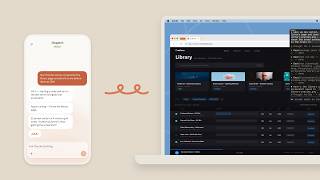
Claude Code transforms your terminal into an autonomous coding agent by utilizing a continuous loop of execution, verification, and context management. Unlike static chat windows, it actively interacts with your codebase through tools to complete tasks autonomously while maintaining security via configurable permission modes.
Key insight: Claude Code autonomously manages its own context window through an auto-compaction process, summarizing past interactions to stay within limits during complex, long-running coding tasks.


