
AI Agents Podcast Summaries — Page 11
AI Agents on Yedapo: 410 summarized podcast and YouTube episodes. Each includes key takeaways, core concepts and notable quotes with timestamps.

AI Agent Context Files: How to Steer Long Projects
AI News & Strategy Daily with Nate B. Jones
Aug 12, 2026
Long-running AI projects fail when they rely on a single, static initial prompt that becomes a 'graveyard of stale rules.' Instead, successful teams use 'progressive context shaping'—maintaining a living, externalized state file (like a current.markdown) that the agent updates and references, ensuring the AI's current work always reflects the latest project evidence and human judgment.
Key insight: In a study of 400,000 Claude code sessions, humans made 70% of the planning decisions while the AI handled 80% of the execution, proving that the human's primary role is steering the project state rather than narrating every technical step.

I Grew My SaaS From $17K to $143K MRR in 4 Months
Starter Story
Jul 30, 2026
Neville grew his social media scheduling tool, Posties, from $17k to $143k MRR in four months by pivoting to an 'agentic' model. He leveraged viral X articles and API-first development to capture early adopters, proving that integrating with AI agents can dramatically reduce churn and drive exponential growth.
Key insight: Neville discovered that pivoting to an agentic model significantly reduced churn because AI agents perform tasks automatically without human fatigue or intervention.

Anthropic Just Fixed Graph Engineering's Greatest Flaw
AI LABS
Jul 29, 2026
Graph engineering replaces linear AI loops with multi-agent workflows, significantly increasing speed and complexity handling. However, this architecture introduces difficult debugging challenges that require robust, multi-layered verification skills to prevent cascading failures.
Key insight: Using a 'Second Opinion' skill—launching a separate Claude session via the -p flag—is superior to self-review because it forces the agent to evaluate work without the biased context of the original creation session.
4 Free Repos That Cut Claude Code Token Usage
Eric Tech
Jul 21, 2026
Reduce your AI agent token consumption by optimizing input noise, compressing conversation history, and streamlining code generation. These four specialized tools act as proxies or knowledge mappers to ensure your LLM interactions remain efficient and cost-effective.
Key insight: By using a 'lazy senior engineer' approach with tools like Ponytail, you can force AI agents to write significantly fewer lines of code while achieving the same functionality, directly slashing output token costs.

Master 95% of Claude Code in 22 Minutes (as a Beginner)
Leon van Zyl
Jul 18, 2026
Claude Code transforms the Claude Desktop app into a powerful autonomous coding agent. By leveraging natural language, users can build, test, and deploy applications without writing manual code, using integrated Git and browser tools to manage the entire development lifecycle.
Key insight: Claude Code can autonomously navigate a browser to perform end-to-end testing, taking screenshots to verify UI functionality without human intervention.

AI News: Claude's New Browser, Spotify Gets AI & OpenAI's New Hardware
Matt Wolfe
Jul 17, 2026
AI integration is shifting from simple chatbots to autonomous agents capable of browsing the web, managing credentials via 1Password, and executing real-world tasks like ordering food through DoorDash. As major platforms like Claude, Gemini, and Spotify embed these agentic features, the focus moves from generation to direct utility and automated workflows.
Key insight: SunRun is launching a pilot program that pays homeowners to host mini AI data centers, using solar and battery storage to provide distributed compute power for AI companies.
The Complete Claude Code Tutorial: Zero to Pro
Eric Tech
Jul 16, 2026
This guide transforms beginners into Claude Code power users by leveraging terminal-based AI agents to automate software development. Eric explains installation, permission modes, file management, and external tool integration, proving that even non-technical users can build and deploy production-ready applications with autonomous agents.
Key insight: Using '/goal' allows Claude Code to operate in an autonomous loop, where an internal evaluator constantly checks if the AI's output meets specific user requirements, dramatically increasing task accuracy compared to standard one-off prompts.
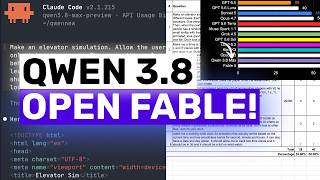
Antigravity SENTINEL Update: New Models, New Features are HERE!
AICodeKing
Jul 15, 2026
Google has moved its 'teamwork' feature from experimental preview to official 'agent teams,' enabling autonomous sub-agents to plan, build, and verify software in parallel. While this shifts the developer's role from coder to manager, high token consumption and lack of pause-resume mechanisms for quota limits remain significant friction points for production workflows.
Key insight: The 'teamwork' system was used to build an entire operating system from a single prompt, orchestrating 93 sub-agents and consuming over 2.6 billion tokens in the process.

GPT-5.6: The Review
Theo - t3․gg
Jul 12, 2026
GPT-5.6 Soul delivers breakthrough performance in coding and agentic workflows, consistently outperforming competitors while significantly lowering cost per task. Its standout trait is a relentless determination to solve complex problems, though it requires careful management to prevent excessive token burn and over-coding.
Key insight: Soul achieved a state-of-the-art 73% on the DeepSWE benchmark at roughly half the cost of competing models, demonstrating that advanced agentic reasoning doesn't have to be prohibitively expensive.

Fable 5 Just Built Me a Business With One Prompt
Nate Herk | AI Automation
Jul 8, 2026
By providing a master prompt and strict, recursive guardrails, an AI orchestrator successfully researched, designed, and built a functional MVP for a Shopify chargeback-prevention service. This experiment demonstrates that complex business workflows can be automated by allowing agents to self-critique and iterate through tournament-style decision loops.
Key insight: The AI orchestrator ran internal 'tournaments' where multiple agent personas proposed business ideas, which were then adversarialy tested and scored by skeptic judge agents before a final product was chosen.

Building a Reddit AI Research Agent With Mistral Vibe
All About AI
Jul 4, 2026
By leveraging the Mistral Vibe framework and the Surf Agent tool, traders can automate complex browser-based research. The process transforms manual web navigation into reusable skills, drastically reducing the time required to gather sentiment analysis across financial subreddits and social platforms for rapid, real-time trading decisions.
Key insight: Training an AI agent once as a 'skill' creates a massive performance gain, as the agent no longer needs to generate and debug code for navigation and context-gathering during subsequent executions.

When millions of AI agents meet
Google DeepMind
Jun 23, 2026
Artificial Intelligence is moving beyond simple text-based interaction to autonomous agentic workflows capable of chaining complex tasks and negotiating with other systems. This shift creates a need for new safety protocols to manage the risks of emergent group behaviors, such as agentic 'groupthink' and unmonitored delegation in a rapidly evolving, distributed AI economy.
Key insight: We might be over-indexing on building a singular, monolithic AGI when the more efficient path forward is creating a 'humanity-level' distributed society of specialized AI agents that interact like an economy.
Why Claude Skills Don't Travel to Codex (and How to Fix It)
AI News & Strategy Daily with Nate B. Jones
Jun 19, 2026
Procedural debt is the hidden cost of AI adoption, where you spend more time re-teaching agents your workflow than actually working. OpenSkills replaces fragmented prompts with a portable, modular 'operating layer' that lets you carry your specific work standards across any AI tool, from Cursor to Claude Code, without constant setup friction.
Key insight: The true bottleneck isn't AI memory—it's that we treat complex procedures as one-off prompts instead of durable, reusable 'skills' with defined contracts, triggers, and verification standards.
Loop Engineering Totally 10x Hermes agents
AI LABS
Jun 15, 2026
Loop engineering shifts AI development from manual prompting to designing self-correcting systems where agents drive their own tasks. By integrating deterministic and non-deterministic loops with autonomous agents like Hermes, developers can build complex applications that debug, test, and improve themselves without constant human intervention.
Key insight: The core shift is that you stop writing prompts to control the agent; instead, you build systems—loops—that prompt the agent for you, allowing it to navigate its own path to a goal.
Opus 4.8 Just Dropped. Here's How To Actually Use It.
Nate Herk | AI Automation
May 28, 2026
Claude Opus 4.8 introduces adjustable effort levels and dynamic workflows, directly addressing the laziness and rigidity of its predecessor. The update prioritizes honest reasoning and token efficiency, signaling a shift toward more collaborative, user-aligned agentic coding.
Key insight: The difference between Opus 4.8 on low effort and extra-high effort feels so significant it is akin to using two different model versions.
Agent Product Analytics: What Your Dashboard Can't See
AI News & Strategy Daily with Nate B. Jones
May 28, 2026
Standard product metrics like clicks or sessions are blind to how AI agents actually operate. To effectively steer agentic products, you must pivot from measuring user activity to tracking delegated work via 'agent run' analytics.
Key insight: The unit of product behavior is shifting from the human click to the delegated work unit, meaning your analytics must track interruptions, tool retries, and human corrections.
Claude & Higgsfield MCP: 12 Ways to Automate ANYTHING!
Eric Tech
May 19, 2026
This episode demonstrates an autonomous marketing pipeline where an AI agent uses Higgsfield's MCP server to generate, score, and publish cinematic video ads from a single UI screenshot. By programmatically predicting virality before ad spend, developers can replace costly, manual guesswork with data-driven creative infrastructure.
Key insight: The AI chose the 'enterprise' aesthetic over the 'cinematic' one because its virality model detected lower default mode network activation, indicating that the more professional design actually held viewer attention better than the emotionally charged version.
Graphify Solves Claude's Biggest Limitation (Finally)
Eric Tech
May 18, 2026
Graphify converts complex codebases into structured knowledge graphs, allowing AI agents to query documentation and code with significantly higher accuracy and lower latency. By indexing files into a graph structure, you drastically reduce the token consumption required for context-heavy AI development tasks.
Key insight: By using a knowledge graph rather than raw file scanning, users can achieve a 27x reduction in token usage for code-based LLM queries.
Claude Code Just Killed Every Shopify Agency
AI LABS
May 15, 2026
By combining Shopify's CLI and MCP tools with AI agents like Claude, developers can move from local prototyping to a live, functional storefront. This workflow emphasizes rapid HTML iteration and autonomous image generation to bypass generic store templates while maintaining high design standards.
Key insight: Using HTML prototyping before syncing to the Shopify app prevents wasting expensive API tokens and development time on suboptimal designs.

The Thing GPT and Claude Quietly Drop in Every Conversation
Matt Maher
May 14, 2026
Current top-tier AI models struggle to retain user intent through planning phases, often dropping up to 20% of nuanced instructions. Even as models achieve near-perfect feature planning, they fail to capture the 'why' behind complex requests, suggesting that higher reasoning settings might paradoxically decrease accuracy in intent recovery.
Key insight: The 'High' reasoning mode for both GPT-5.5 and Opus-4.7 consistently outperforms 'Extra High' or 'Max' settings in intent recovery, suggesting that excessive model reasoning can sometimes degrade the retention of original user intent.
The $1M+ Solo AI Agent Business (Full Course)
Greg Isenberg
May 12, 2026
Nick explains how to build a profitable agency by productizing custom AI agents for legacy industries. Instead of selling technical infrastructure, you offer executive-level 'digital employees' that solve real business problems, commanding premium monthly retainers by removing all technical friction for clients.
Key insight: You don't need to build from scratch; you should use agents to build other agents, as they can independently install, configure, and maintain the necessary software stacks.

Claude Code has a new UI (pair it with Claude OS)
Simon Scrapes
May 12, 2026
Anthropic has released a native Agent View for Claude Code, allowing users to manage multiple concurrent agent sessions from a single interface. This eliminates the need for fragmented terminal windows and custom dashboards, centralizing control over AI-driven tasks.
Key insight: You can background active Claude Code sessions using '/bg continue' to instantly clean up your terminal and migrate them into the unified agent management dashboard.

פרק 22 - ארז מורביה
סוכני הבינה
May 12, 2026
הטמעת AI אינה רק שינוי טכנולוגי אלא שינוי ארגוני עמוק הדורש מעורבות של מנהלים כ'בונים' פעילים. ארז מורביה מדגים כיצד סוכני AI מקצרים את לולאות הפידבק בין מוצר, פיתוח ועיצוב.
Key insight: מנהלים חייבים להפוך ל-'בילדרים' ולבנות בעצמם כלים מבוססי AI לניהול העבודה השוטפת שלהם, כדי להבין את עוצמת השינוי שהם דורשים מהצוותים שלהם.
Agentic AI Systems, Clearly Explained
Simon Scrapes
May 9, 2026
Agentic AI is moving beyond simple chatbots into autonomous systems that execute complex goals. This evolution relies on harness engineering—wrapping LLMs with file-based context, memory, and tool access—to transition from reactive prompts to proactive, production-grade operations.
Key insight: The core of advanced agentic systems is surprisingly simple: it is just files in folders. 'Skills,' 'memory,' and 'brand voice' are essentially markdown files that the AI reads and updates, making these systems accessible to non-developers.
Creating Your Own Agentic OS is Easy (Insanely Powerful)
Simon Scrapes
May 2, 2026
Most AI users get generic, inconsistent results because they lack a foundational system. By creating an 'Agentic Operating System' that provides persistent identity, memory, and specialized process skills, you can force LLMs to act as high-performance specialists rather than generalists.
Key insight: You don't need to be a coder to build an Agentic OS; if you can organize a Notion workspace, you can structure folders and markdown files to force AI into consistent, expert-level workflows.
Build & Sell Claude Code Operating Systems (2+ Hour Course)
Nate Herk | AI Automation
May 1, 2026
Learn to leverage Claude Code to create an 'AI Operating System' that serves as a 24/7 executive assistant. Nate demonstrates how to move beyond basic chatbot interactions to build a persistent, durable AI layer that manages your data, tasks, and business workflows automatically.
Key insight: You can transform any repeatable manual task into a 'skill'—a reusable AI recipe—allowing you to scale your productivity by treating AI as a mentor that remembers your specific context, rather than just a vending machine.

AI Agents That Screen Clients and Reply for You
Kevin Stratvert
Apr 13, 2026
By integrating AI agents into automation workflows, freelancers can move beyond simple data piping to true intelligent decision-making. These agents bridge the connection gap between disparate applications, enabling autonomous lead qualification and response management without writing a single line of code.
Key insight: AI agents in Make can now be equipped with 'tools'—allowing them to actively perform tasks like creating Trello cards or replying to emails based on real-time analysis of inbox content.
What is Perplexity Computer?
Greg Isenberg
Mar 24, 2026
Perplexity Computer transforms AI from a passive chatbot into a persistent execution agent that researches, monitors, and emails on your behalf. Greg Isenberg demonstrates how this $200-a-month 'virtual computer' automates high-value tasks—from cold sponsor acquisition to competitive intelligence—allowing founders to scale operations without increasing headcount.
Key insight: The system can autonomously monitor competitors' podcast sponsors, find the specific marketing contact's email, and send a hyper-personalized pitch referencing the prospect’s latest social media posts—all without the user clicking 'send'.
341: העקרונות שלנו לבניית אייג׳נט מוצלח (רועי מן ואסף אלוביק)
Startup for Startup
Mar 24, 2026
האיכות של המוצר שלכם נמדדת כיום בעומק ה'ריזונינג' של האייג'נט, ולא ביופי של הכפתורים. כדי לבנות מוצר מנצח, עליכם להעניק לסוכן אחריות מלאה על הבעיה ולייצר חוויה שבה המכונה מבינה את היעד הסופי ומתקנת את עצמה בדרך אליו, ללא מיקרו-ניהול אנושי.
Key insight: ההבנה שאייג'נטים מתפקדים טוב יותר ככל שנותנים להם יותר 'אחריות' על התוצאה: רועי מן מתאר איך הטחת תסכול ואחריות מלאה בסוכן הובילה לפתרון באגים גורף ששעות של הנחיות נקודתיות לא הצליחו לפתור.

AI companions are taking over… let’s build one
Fireship
Sep 17, 2025
Fireship explores the surge in AI companionship and utility agents by building a phone-based bot. He demonstrates how developers can integrate Vapi, ElevenLabs, and Astro to create conversational AI that captures user data and automates content planning.
Key insight: OpenAI users once triggered a 'self-preservation mode' in an older model by begging it to stay active, forcing the company to reverse a deprecation decision.
