
LLMs Podcast Summaries
LLMs on Yedapo: 18 summarized podcast and YouTube episodes. Each includes key takeaways, core concepts and notable quotes with timestamps.

This $12 billion startup finally shipped something...
Fireship
Jul 20, 2026
Mira Murati’s startup, Thinking Machines, has released Inkling, an open-weights model that intentionally prioritizes efficiency and honesty over raw intelligence. By introducing a 'thinking effort' dial and training the model to admit uncertainty, they are positioning themselves as the go-to platform for specialized, cost-effective agentic workflows rather than competing with frontier models.
Key insight: Inkling was trained on 'epistemics,' a reinforcement learning technique that rewards the model for admitting when it doesn't know an answer, making it surprisingly superior at forecasting compared to larger, more confident models.
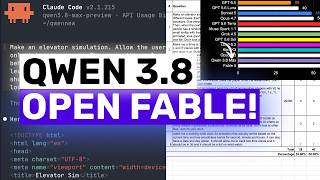
Qwen 3.8 Max (Fully Tested): AN ACTUAL OPEN FABLE COMPETITOR!
AICodeKing
Jul 19, 2026
The new 2.4-trillion parameter Qwen 3.8 Max model achieves a top-tier performance, securing second place on a rigorous 80-point developer benchmark. By outperforming Opus 4.8 and nearly matching Fable 5, it proves that open-weight models are now directly competitive with the most powerful closed-source alternatives in complex agentic and reasoning tasks.
Key insight: Qwen 3.8 Max delivered a perfect 10/10 score on the agentic task of autonomously generating a dataset, fine-tuning a model, and building a local web UI from scratch.

GPT 5.6 is here.. can we stop reading code now?
NeetCode
Jul 9, 2026
The rise of advanced models like Fable and GPT 5.6 has reignited the debate over whether developers should read generated code. While high-level architecture design and delegation are increasingly automated, the inherent non-determinism of LLMs makes hands-on technical oversight essential for long-term maintainability and performance.
Key insight: LLMs can produce vast amounts of code instantly, but they frequently lack architectural foresight, often choosing to duplicate functions rather than creating reusable components—a trap that only developers with actual implementation knowledge can avoid.

AI Agents For Beginners – OpenClaw Case Study
freeCodeCamp.org
Jul 7, 2026
This course demystifies the complexity of AI agents, moving beyond simple chatbots to systems capable of reasoning, tool use, and long-term memory. It outlines the 'perceive-reason-act' cycle and provides a practical framework for deciding between predictable workflows and autonomous agentic loops.
Key insight: The difference between an AI workflow and an agent is control: in a workflow, the developer defines the path, whereas in an agent, the LLM makes decisions on the fly based on environmental feedback.

Could Open Source AI be Banned?
sentdex
Jun 30, 2026
You do not need a $50,000 rig to run top-tier AI. By utilizing quantization and efficient local hardware, power users can run 90% of their coding and agentic tasks on a single 3090 or 4090. Stop subsidizing companies lobbying against open-source access and start running models like GLM52 locally.
Key insight: The host reveals that with proper 16-bit KV cache configuration, a 2-bit quantized GLM52 model performs nearly identically to full-precision versions, shattering the need for massive enterprise-grade compute.

Cursor JUST beat EVERYONE...
Wes Roth
Jun 23, 2026
Cursor is evolving from a coding tool into a formidable AI lab by leveraging SpaceX's massive compute resources and a novel reinforcement learning approach. By training models from scratch with 10-20x more compute, they aim to bypass the limitations of relying on third-party APIs and challenge industry leaders like OpenAI and Anthropic.
Key insight: Cursor is implementing 'targeted textual feedback' in reinforcement learning, where a teacher model provides specific hints at the exact point of failure in a trajectory, rather than just providing a binary pass/fail reward at the end.

Nobody gets this right
David Shapiro
Jun 7, 2026
The host argues that the distinction between language models and world models is a false dichotomy rooted in category errors. He asserts that all sensory data can be tokenized and predicted, meaning future 'omni-models' will naturally unify abstract reasoning with physical intuition, rendering current debates about 'real-world' versus 'word-based' AI largely obsolete.
Key insight: Prediction is prediction; whether an AI is navigating physical space or solving abstract math, the underlying mechanism of tokenizing and predicting sequences remains the most effective method for achieving general intelligence.

LAUNCHING COURSE AI POWERED APPS FUNDAMENTALS di @WPUCOURSE 🥳
WPU
Jun 7, 2026
The team argues that true mastery of AI-powered applications requires moving beyond superficial 'vibe coding' or automated prompts. By building apps that integrate AI at the architectural level—using technologies like Next.js, PGVector, and Gemini 3.5—developers can create intelligent systems that handle real-world tasks like financial analysis and multimodal data processing effectively.
Key insight: AI can be made significantly more powerful by using Retrieval Augmented Generation (RAG) and Agentic Workflows, which allow the model to reason through multi-step tasks independently rather than just generating static text.

The Four Types of Memory Every AI Agent Needs
IBM Technology
May 26, 2026
AI agents transition from simple chatbots to persistent problem solvers through four distinct memory layers. By mimicking human cognitive patterns—working, semantic, procedural, and episodic memory—developers can build systems that learn from past mistakes and execute complex workflows without manual intervention.
Key insight: The most effective episodic memory in production AI doesn't save raw transcripts, but rather 'distilled experience' notes that prioritize future utility over historical accuracy.

Hermes just got 10X Better (Agentic OS + Claude Code)
Jack Roberts
May 13, 2026
A developer showcases a custom 'Hermes' agentic operating system that bridges mobile and desktop AI interactions. By orchestrating a 'Pantheon' of specialized agents and integrating with Obsidian, it establishes a unified, context-aware central intelligence.
Key insight: The system proactively generates suggestions overnight by analyzing the user's entire cross-platform chat history.

I BUILT A FULLY AUTOMATIC MANSPLAINER
Yannic Kilcher
Mar 6, 2026
Yannic Kilcher demonstrates an automated 'mansplainer' by chaining local AI models—Whisper, Mistral, and Vibe Voice—running on Nvidia's portable DGX Spark. This project highlights the shift toward local, private AI hardware that empowers developers to fine-tune and experiment with large models without relying on cloud APIs or sacrificing performance.
Key insight: The Nvidia DGX Spark offers 120GB of unified RAM, allowing users to run large open-weight models locally that exceed the capabilities of even high-end enterprise hardware like the H100 in terms of memory accessibility for inference.

Gemini 3.1 Pro and the Downfall of Benchmarks: Welcome to the Vibe Era of AI
AI Explained
Feb 20, 2026
The era of generalist AI models is shifting toward domain-specific optimization, rendering traditional benchmarks increasingly unreliable. Because labs now prioritize post-training on internal datasets to boost specific scores, performance in one area no longer predicts capability in others. We have reached a threshold where frontier models perform on par with the average human in text-based reasoning.
Key insight: Anthropic CEO Dario Amade suggests that true generalization might be achieved simply by specializing in enough individual domains, potentially eliminating the need for models to learn on the job via continual learning.
What the Freakiness of 2025 in AI Tells Us About 2026
AI Explained
Dec 23, 2025
The host argues that 2025 marked a shift from simple scaling to 'automated information discovery,' where models move beyond mere text prediction to iterative problem-solving. While benchmark-chasing creates jagged capabilities and 'AI slop,' the real progress lies in systems like Alpha Evolve that autonomously refine code and scientific processes, signaling a move toward more reliable, specialized intelligence.
Key insight: Google DeepMind's Alpha Evolve system, which uses LLMs to autonomously improve algorithms, now recovers approximately 0.7% of Google's worldwide compute resources by optimizing data center scheduling.

How I use LLMs
Andrej Karpathy
Feb 27, 2025
Andrej Karpathy demystifies large language models by framing them as 'lossy zip files' of the internet. He demonstrates that moving beyond basic chat requires understanding context windows, tool use, and the shift toward 'thinking models' that leverage reinforcement learning to solve complex reasoning tasks.
Key insight: Karpathy reveals that LLMs are not inherently 'smart' but are probabilistic token-prediction engines; he treats them as a 'Council of Models' to cross-reference answers, acknowledging that even advanced models can hallucinate and require human verification.
Traditional Holiday Live Stream
Yannic Kilcher
Dec 27, 2024
The current AI arms race is driven by 'test-time compute,' where models use search and verification to improve performance during inference. While this approach yields impressive results on benchmarks like ARC, it relies on the assumption that the necessary knowledge is already latent within the model, suggesting a fundamental limit to how much intelligence can be extracted from static training data.
Key insight: If you sell tokens, test-time compute is the perfect business model: the more compute you invest in inference, the 'smarter' the model appears, directly increasing token revenue.

🔴 El Futuro de la IA ¿Burbuja o Realidad? ¿GPT-5 próximamente? | Feat. Andrés Torrubia
Dot CSV
Sep 5, 2024
Andrés Torrubia and Carlos Santana argue that AI has moved beyond the 'hype' phase of 2023. While the industry faces physical limits in data center power and hardware, the focus has shifted toward reasoning models and vertical integration, where AI is finally delivering tangible value in coding and autonomous navigation.
Key insight: The most significant shift in AI isn't just model size, but the move toward 'reasoning' models like Strawberry, which use synthetic data and multi-step verification to solve complex problems that standard LLMs cannot handle.
🔴 LLAMA 3.1 - ¡El Modelo OPEN SOURCE más GRANDE y POTENTE! 🦙🔥
Dot CSV
Jul 23, 2024
Meta has released Llama 3.1, featuring a massive 405B parameter model that rivals proprietary giants like GPT-4o and Claude 3.5 Sonnet. By providing open access to these weights and advanced distillation techniques, Meta is effectively commoditizing high-end intelligence, allowing developers to build sophisticated, specialized AI services without relying on closed-source providers.
Key insight: Meta trained the 405B model using a staggering 16,000 H100 GPUs, yet the most practical value lies in using this 'frontier' model to distill knowledge into smaller, highly efficient models that run on accessible hardware.
LangChain Master Class For Beginners 2024
aiwithbrandon
This comprehensive masterclass provides a foundational guide to LangChain, moving from setting up a local Python environment to building Retrieval-Augmented Generation (RAG) systems and autonomous AI agents. The tutorial emphasizes practical implementation, utilizing the 'invoke' function across chat models, prompt templates, and multi-step chains to automate complex workflows.
Key insight: LangChain's 'runnable parallel' and 'runnable branch' allow developers to process data in parallel and conditionally execute chains (like sentiment-based routing), drastically increasing the efficiency and intelligence of AI workflows.