
Software Development Podcast Summaries — Page 3
Software Development on Yedapo: 96 summarized podcast and YouTube episodes. Each includes key takeaways, core concepts and notable quotes with timestamps.

Claude Code Full Course – Autonomous Goals, MCP, and VS Code Setup
freeCodeCamp.org
Aug 5, 2026
This guide transforms beginners into Claude Code power users in 60 minutes. It covers local installation, VS Code integration, autonomous goal-setting, and using MCPs to connect AI agents with real-world tools like GitHub, Jira, and Vercel.
Key insight: Claude Code can run autonomously in a loop using the '/goal' command, which uses an internal evaluator to verify requirements and self-correct until the task is fully met.

Buzz Just Fixed AI Agents... But It Has A Serious Flaw
AI LABS
Aug 4, 2026
Buzz is an open-source platform that lets AI agents collaborate in a shared chat environment, effectively acting as a team-based operating system for LLMs. While it solves the critical problem of agent transparency and auditability, its current token inefficiency and lack of privacy make it unsuitable for solo developers.
Key insight: Replying to a simple greeting in Buzz consumed 31,000 tokens, compared to just 4,000 tokens for the same interaction in a standard terminal-based Claude Code session.
Master 95% of Cursor in 60 Minutes
Riley Brown
Jul 30, 2026
Cursor has evolved into a powerful AI-native agent capable of building, hosting, and managing complex applications through natural language. By leveraging AI agents, cloud-based databases, and automated deployment, non-technical users can now create, test, and iterate on functional software without traditional programming knowledge.
Key insight: You can now use the Cursor iOS app to spin up cloud-based agents that build, test, and record video demonstrations of your app features directly from your phone, creating a pull request for your review without ever touching a desktop IDE.

Master 95% of Claude Code in 22 Minutes (as a Beginner)
Leon van Zyl
Jul 18, 2026
Claude Code transforms the Claude Desktop app into a powerful autonomous coding agent. By leveraging natural language, users can build, test, and deploy applications without writing manual code, using integrated Git and browser tools to manage the entire development lifecycle.
Key insight: Claude Code can autonomously navigate a browser to perform end-to-end testing, taking screenshots to verify UI functionality without human intervention.
How an Apple Engineer Pranked Billion-Dollar Lawyers (and Won)
freeCodeCamp.org
Jul 17, 2026
An Apple engineer successfully trolled the company's legal department by smuggling a hidden message into the operating system. This story highlights the enduring power of small acts of rebellion in software engineering and the absurdity of corporate bureaucracy.
Key insight: The Apple alert sound 'Sosumi' is a pun on 'So sue me,' created by engineer Jim Reeks to mock Apple's legal battle with the Beatles.
Devin AI: The Full Beginner’s Guide (Better Than Claude Code?)
Riley Brown
Jul 16, 2026
Riley Brown demonstrates how to use Devin, an AI software engineer, to build a fully functional landing page, lead capture system, and data dashboard. By leveraging frontier LLMs, the workflow bypasses manual coding to launch live, data-driven applications in minutes.
Key insight: You can manage an entire fleet of AI agents simultaneously within Devin to handle diverse tasks, from UI design to database schema creation, without writing a single line of code.
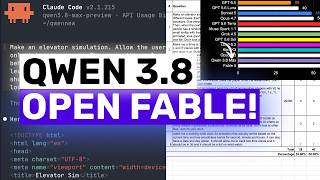
Antigravity SENTINEL Update: New Models, New Features are HERE!
AICodeKing
Jul 15, 2026
Google has moved its 'teamwork' feature from experimental preview to official 'agent teams,' enabling autonomous sub-agents to plan, build, and verify software in parallel. While this shifts the developer's role from coder to manager, high token consumption and lack of pause-resume mechanisms for quota limits remain significant friction points for production workflows.
Key insight: The 'teamwork' system was used to build an entire operating system from a single prompt, orchestrating 93 sub-agents and consuming over 2.6 billion tokens in the process.
GPT 5.6 Sol vs Fable 5... This Is What You Need To Know
AI LABS
Jul 12, 2026
OpenAI's new 'Soul' model shifts the paradigm from deliberative coding to persistent execution. While less effective at high-level architectural judgment than established models, Soul excels at completing complex, multi-step tasks autonomously. Success requires strict workspace boundaries to prevent unintended file deletions.
Key insight: Soul's 'computer use' capability allows it to act as a human user, logging into different accounts to test complex features across multiple browser tabs autonomously.
These AI Agents Improve My App Every 10 Minutes While I Sleep
Leon van Zyl
Jul 8, 2026
You can transform your software development lifecycle by deploying autonomous coding agents on a persistent VPS. By scheduling recurring tasks, these agents perform continuous security audits, bug fixes, and feature improvements, creating pull requests for your review and manual approval.
Key insight: By running AI agents in headless mode via cron jobs on a virtual private server, you can create a 24/7 automated engineering team that iterates on your codebase without human intervention.

Cut your AI cost IN HALF (EASY)
Matthew Berman
Jul 7, 2026
Stop using expensive frontier models for every task. By separating high-level architectural planning from routine code execution, you can delegate the heavy lifting to cheaper, efficient models. This strategy, used by companies like Coinbase, maintains output quality while drastically reducing token spend.
Key insight: Output tokens are significantly more expensive than input tokens; since coding tasks require high output volume, offloading them to a cheaper model after a frontier model creates the plan can save over 60% of your total AI budget.

A proper guide to Fable 5
Theo - t3․gg
Jul 6, 2026
The host demonstrates that modern AI models like Fable are not just smarter versions of their predecessors; they represent a fundamental shift in software engineering. By utilizing sub-agents, workflows, and strategic model routing, developers can automate complex end-to-end implementations, drastically increasing shipping velocity while keeping costs manageable.
Key insight: Setting reasoning effort to 'High' is superior to 'Max' or 'X-High' for most tasks; higher settings often lead to over-reasoning, worse code quality, and significantly higher costs without improving output.
Save 90% Of Tokens With This Hermes Agent Setup
AI LABS
Jul 1, 2026
Excessive token consumption in Hermes often stems from bloated context windows and inefficient background tasks. By optimizing model routing, trimming skill lists, and enforcing strict turn limits, you can significantly lower operational costs without sacrificing performance quality.
Key insight: Hermes agents often burn tokens on 'auxiliary tasks' like scanning skills and auto-updating memory; switching these to cheaper, lighter models saves money without affecting the quality of the main reasoning output.
AI Agents Just Changed Forever: GLM 5.2 The Best Open-Source Model Ever?
Riley Brown
Jun 21, 2026
The landscape of AI agents is shifting rapidly with the emergence of powerful open-source models like GLM 5.2 and major corporate consolidations like SpaceX's acquisition of Cursor. These developments are forcing frontier labs to accelerate innovation, while new tools enable users to turn screen recordings into repeatable AI workflows.
Key insight: The Chinese-developed GLM 5.2 model is currently rivaling GPT 5.5 and Claude Opus in performance while being significantly cheaper, challenging the dominance of Western frontier labs.
Codex vs Claude Code: What I Found After 30 Days
Leon van Zyl
Jun 18, 2026
While Claude Code delivers superior UI polish and intuitive visual design, Codex offers a more technically rigorous, cost-efficient, and maintainable output. This head-to-head performance test reveals that your choice should depend on whether you prioritize aesthetic speed or architectural control and long-term budget value.
Key insight: Codex consumed only 16% of the monthly budget compared to Claude Code's 8% usage on a significantly more expensive plan ($100 vs $250).

Vale la pena di scrivere codice?
Piero Savastano
Jun 15, 2026
Lo sviluppo software sta vivendo un trauma da transizione, dove il valore si sposta dalla mera scrittura di codice alla capacità di progettare flussi orchestrati e gestire l'integrazione di sistemi. Gli esperti suggeriscono che la vera competenza del futuro risieda nella visione di prodotto e nella capacità di filtrare la complessità tecnica per creare valore tangibile.
Key insight: La creatività pura e la capacità di risolvere problemi complessi restano il vero 'mote' difendibile, poiché l'AI eccelle nell'esecuzione ma manca della visione strategica e dell'intento umano necessario per costruire prodotti con un reale impatto.
Loop Engineering Totally 10x Hermes agents
AI LABS
Jun 15, 2026
Loop engineering shifts AI development from manual prompting to designing self-correcting systems where agents drive their own tasks. By integrating deterministic and non-deterministic loops with autonomous agents like Hermes, developers can build complex applications that debug, test, and improve themselves without constant human intervention.
Key insight: The core shift is that you stop writing prompts to control the agent; instead, you build systems—loops—that prompt the agent for you, allowing it to navigate its own path to a goal.

El nuevo modelo de google es...
HolaMundo
Jun 8, 2026
While Google's Gemma 4 12B model promises capable local software development, it suffers from inconsistent performance and high resource demands. Comparative testing reveals that Qwen 3.5 9B and Qwen 3.6 35B offer superior speed, better consistency, and more reliable architectural reasoning for real-world coding tasks when running on local hardware.
Key insight: The author achieves 190-220 tokens per second with Qwen 3.6 35B using MTP (Multi-Token Prediction), vastly outperforming Gemma 4 12B in both speed and reliability.
The Blueprint For The Complete Claude Operating System
AI LABS
Jun 3, 2026
Claude Code has transformed from a simple coding agent into a complex operating system by utilizing dynamic workflows. These workflows enable parallel, multi-agent task execution, essentially allowing users to automate large-scale, deterministic project tasks without manual intervention.
Key insight: Using dynamic workflows to migrate an entire project codebase reduced the execution time from over an hour to just 21 minutes compared to standard single-agent methods.
Why AI Is So Divisive for Developers
Traversy Media
Jun 1, 2026
The rise of AI has polarized the tech industry into warring 'pro-AI' and 'doomer' camps, mirroring the hyper-divisiveness of modern politics. This tribalism ignores the reality that AI is a powerful force multiplier for those with fundamental skills, while simultaneously threatening the livelihood of juniors facing an eroding job market.
Key insight: Influencers frequently feed the 'AI slop' outrage cycle for engagement, often secretly using the very AI tools they publicly condemn to build their own projects.

פרק 23 - ספיישל מנהלי מוצר
סוכני הבינה
May 24, 2026
ניהול מוצר עובר טרנספורמציה שבה מפתחים ומנהלים מאמצים יכולות 'בילדרים'. הפרק מציג טכניקות מעשיות לשימוש בסוכני AI לצורך ניתוח קוד, יצירת PRD אוטומטי וניהול פרויקטים אישיים.
Key insight: הטריק הטוב ביותר למנהלי מוצר הוא ביצוע 'git pull' לריפו הפרויקט והזנתו לסוכן AI — זה מייצר הקשר מדויק שחוסך עשרות אחוזים מהזמן בפינג-פונג עם פיתוח ועיצוב.

פרק 22 - ארז מורביה
סוכני הבינה
May 12, 2026
הטמעת AI אינה רק שינוי טכנולוגי אלא שינוי ארגוני עמוק הדורש מעורבות של מנהלים כ'בונים' פעילים. ארז מורביה מדגים כיצד סוכני AI מקצרים את לולאות הפידבק בין מוצר, פיתוח ועיצוב.
Key insight: מנהלים חייבים להפוך ל-'בילדרים' ולבנות בעצמם כלים מבוססי AI לניהול העבודה השוטפת שלהם, כדי להבין את עוצמת השינוי שהם דורשים מהצוותים שלהם.

Building Realistic Voice Agents Has Never Been Easier
Nate Herk | AI Automation
May 4, 2026
Nate demonstrates how to deploy fully functional voice AI agents by using Claude Code to orchestrate 11Labs and Cal.com. Instead of manual configuration, you leverage LLM reasoning to research APIs, write prompts, and debug tool-calling logic, dramatically reducing the time to ship production-ready sales agents.
Key insight: You don't need to manually read API documentation; you can have an LLM-based agent build and debug its own integrations by simply describing the desired business logic and iterating on errors.
Gemini CLI Essentials – Full Course
freeCodeCamp.org
Apr 24, 2026
This episode provides a comprehensive guide to Gemini CLI, a powerful agentic coding tool. It focuses on practical setup, authentication methods, model selection, and advanced workflow management. By walking through real-world examples, you'll learn to optimize AI-driven development and handle common pitfalls like authentication hurdles and context window management.
Key insight: The most counterintuitive insight is that Gemini CLI's '1 million token' context window is essentially marketing; in practice, it often struggles with performance and reliability long before reaching that limit, making manual context management (Clear/Compress) essential.
64 - AI coding metrics | Liad Elidan (Milestone)
LangTalks
Mar 8, 2026
הפרק מציג מסגרת עבודה מקיפה למדידת פרודוקטיביות הנדסית בעידן ה-AI. הוא מדגיש את המעבר ממדידות מטה-דאטה מסורתיות לניתוח עומק של אינטראקציות, איכות קוד וקשרים בין סוכני AI לביצועים בפועל.
Key insight: המודלים שבהם אנו משתמשים היום הם כנראה הגרועים ביותר שנשתמש בהם בשארית חיינו, מה שמחייב גרסאות (Versioning) תכופות גם לסוכני ה-AI בארגון.

OpenClaw: The Viral AI Agent that Broke the Internet - Peter Steinberger | Lex Fridman Podcast #491
Lex Fridman
Feb 12, 2026
Peter Steinberger, creator of OpenClaw, argues that the future of programming lies in 'agentic engineering'—a paradigm where developers act as architects guiding autonomous AI agents. By treating AI as a collaborative partner rather than a tool, developers can achieve rapid, self-modifying software development that transcends traditional coding methods.
Key insight: Steinberger reveals that his AI agent successfully taught itself to convert audio files without explicit instructions, simply by analyzing file headers and identifying necessary tools like ffmpeg and Whisper through general-purpose problem-solving.

Traditional X-Mas Stream
Yannic Kilcher
Dec 29, 2025
The host steps away from AI research to attempt a Minecraft speedrun, using the game as a backdrop to discuss the limitations of AI-driven coding, current market realities, and the challenges of recursive self-improvement. The episode serves as a humorous reflection on the gap between academic theory and practical, real-world development.
Key insight: When discussing the future of AI, the host admits that most predictions fail, suggesting instead that researchers should focus on developing low-level efficiency skills, as these will remain valuable regardless of whether specific AGI breakthroughs occur.

AI companions are taking over… let’s build one
Fireship
Sep 17, 2025
Fireship explores the surge in AI companionship and utility agents by building a phone-based bot. He demonstrates how developers can integrate Vapi, ElevenLabs, and Astro to create conversational AI that captures user data and automates content planning.
Key insight: OpenAI users once triggered a 'self-preservation mode' in an older model by begging it to stay active, forcing the company to reverse a deprecation decision.

Belajar Python dari nol untuk pemula (Tutorial 2025)
Sekolah Koding
May 31, 2025
Hilman of Sekolah Coding demystifies Python programming by bridging the gap between theory and practice. The session covers essential syntax, logic, and data structures—including lists, loops, and conditional statements—while emphasizing the importance of foundational knowledge over relying on AI-assisted coding tools for novices.
Key insight: Programming doesn't produce what you want; it produces what you explicitly type. Precision in syntax, such as understanding that Python treats uppercase and lowercase characters differently, is critical to avoiding common errors.

Архитектура CQRS
Программирование - это просто
Mar 23, 2020
Ярослав объясняет применение паттернов CQS и CQRS для разделения логики чтения и записи. Основная идея заключается в оптимизации производительности системы через разные подходы к обработке команд и запросов, включая использование пайплайнов и событий для поддержания целостности данных.
Key insight: Большинство систем читают данные значительно чаще, чем записывают, что делает разделение этих двух операций ключевым фактором для оптимизации производительности.

Vibe coding in prod | Code w/ Claude
Anthropic
Vibe coding is not just about using AI for code generation; it is a shift toward managing AI as an expert employee. By focusing on verifiable leaf nodes and maintaining human-led architecture, developers can harness exponential gains in productivity while mitigating the risks of code sprawl and technical debt.
Key insight: The length of tasks that AI can perform is currently doubling every seven months, making it inevitable that engineers will eventually have to trust AI-generated systems without manual verification of every line.

