
Agentic AI Podcast Summaries
Agentic AI on Yedapo: 42 summarized podcast and YouTube episodes. Each includes key takeaways, core concepts and notable quotes with timestamps.

The great VM reset, hybrid AI, and agentic enterprise: rethinking infrastructure in 2026 | Patrick Osborne
Technology Now
Aug 13, 2026
Enterprise technology is undergoing a massive, interconnected transformation driven by the 'Great VM Reset,' the shift toward agentic AI, and a heightened security imperative. Organizations can no longer treat infrastructure as static; they must now manage complex, hybrid environments where data sovereignty and operational efficiency are paramount to survival.
Key insight: The shift to agentic AI isn't just about software; it requires a fundamental platform-level change where infrastructure components register themselves into an 'agentic mesh' to automate complex tasks like virtual machine migration.
Chatbots, agents & LLMs: the future of AI where bigger isn’t always better | Kirk Bresniker
Technology Now
Jul 30, 2026
Large Language Models are just the beginning of a shift toward specialized, energy-efficient AI agents. By moving from general-purpose 'sledgehammer' models to orchestrated teams of expert models, we can achieve deductive reasoning and complex problem-solving that LLMs alone cannot handle.
Key insight: If you want an AI model to be 10 times bigger, you need 100 times the resources; conversely, making a model 10 times smaller requires only 1/100th of the resources.

This $12 billion startup finally shipped something...
Fireship
Jul 20, 2026
Mira Murati’s startup, Thinking Machines, has released Inkling, an open-weights model that intentionally prioritizes efficiency and honesty over raw intelligence. By introducing a 'thinking effort' dial and training the model to admit uncertainty, they are positioning themselves as the go-to platform for specialized, cost-effective agentic workflows rather than competing with frontier models.
Key insight: Inkling was trained on 'epistemics,' a reinforcement learning technique that rewards the model for admitting when it doesn't know an answer, making it surprisingly superior at forecasting compared to larger, more confident models.
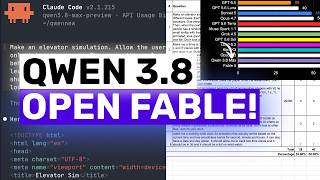
Kimi K3 (Fully Tested): AN OPEN MODEL BEATS FABLE?!
AICodeKing
Jul 16, 2026
Kimi K3 secures third place on the Kingbench leaderboard, outperforming major competitors in complex, long-horizon tasks. Its ability to autonomously self-correct using tools and manage multi-step workflows without excessive 'thinking' time makes it a highly efficient, practical tool for developers.
Key insight: Kimi K3 successfully completed an autonomous data-gathering and fine-tuning task for a Gemma 2B model, proactively troubleshooting its own errors without user intervention—a feat where most models struggle or stall.
How agentic AI is powering smart cities and better public services | Robin Braun
Technology Now
Jul 16, 2026
Local governments often struggle with messy, siloed data that hinders efficiency. By shifting from manual spreadsheet management to agentic AI, cities like Vail are solving everyday friction points like parking and housing permits, allowing staff to focus on high-value community engagement.
Key insight: Nobody joins a government organization to manually look up deeds, but automating this process frees employees to focus on affordable housing and critical community outreach.

KEEP AI LOCAL! Explaining Agentic AI and The Loop: FT MSI Cubi NUC+ and the MSI EdgeXpert Mini PCs
Level1Techs
Jul 9, 2026
Agentic AI harnesses like Turnstone allow users to orchestrate multiple local AI models to execute complex, multi-step tasks autonomously. By using a 'harness' to manage skills, judge models, and memory, developers can create durable, local-first automation that avoids the privacy risks and token costs of cloud-based alternatives.
Key insight: The host demonstrates an AI agent autonomously controlling a separate Windows machine via an MCP (Model Context Protocol) server, performing tasks like system inventory and application launching entirely locally without ever sending data to the cloud.

Hy3 from Tencent - The NEW GLM Competitor
Sam Witteveen
Jul 7, 2026
Tencent has released its 295-billion parameter Hy3 model, signaling a strategic shift toward the open-source ecosystem. While it trails top-tier models in pure coding tasks, its efficiency and strong performance in agentic reasoning and tool-calling make it a viable, locally-hostable option for enterprise-grade applications.
Key insight: Tencent successfully halved both hallucination and common sense error rates in the final version of Hy3 compared to its preview, primarily through rigorous post-training and data refinement rather than just scaling.
MiniCPM5 - Just How Good Can a 1B Model Be?
Sam Witteveen
Jul 5, 2026
The MiniCPM5-1B model demonstrates that small, dense models can effectively handle agentic tasks and tool use without needing massive encyclopedic knowledge. By prioritizing reasoning over memorization, this architecture offers a viable path for running intelligent, task-specific AI locally on smartphones and edge hardware.
Key insight: The MiniCPM5-1B model is significantly more token-efficient than larger reasoning peers, using 31 times fewer tokens than the Qwen 3.5 2B model to achieve comparable reasoning results.

Uh oh, tokens are getting too expensive...
Logically Answered
Jul 3, 2026
Companies are falling victim to the Jevons paradox, where falling token costs drive massive, inefficient consumption. By incentivizing 'tokenmaxxing' and failing to align AI usage with specific, high-value tasks, organizations are incurring hidden costs—often 80% of total spend—on bug fixes and code churn rather than actual productivity gains.
Key insight: For every dollar spent on AI procurement, companies lose $0.80 in hidden costs, including $0.44 to fix AI-generated bugs and $0.27 to rewrite AI-produced code.

Fable 5 is WILD...
Wes Roth
Jul 2, 2026
Fable 5 is shifting the paradigm of software development, allowing users to build custom, functional applications like browser-based RPGs and specialized spreadsheets for under $30 in just one hour. By leveraging agentic AI, developers can now transition from brainstorming to fully deployed, proprietary tools without needing to maintain massive, bloated software suites.
Key insight: For a total cost of $26.25 and 35 minutes of runtime, the AI successfully built an Elder Scrolls-style RPG complete with voiced dialogue, quest tracking, and dynamic physics, demonstrating that artisanal, made-to-order software is now both affordable and rapidly scalable.

The Only PewDiePie Odysseus AI Tutorial You'll Need
Leon van Zyl
Jun 24, 2026
Odysseus AI offers a private, self-hosted alternative to platforms like ChatGPT, allowing users to run local models or cloud-connected agents while retaining full data ownership. By controlling the infrastructure and integrating local tools, users can build a secure 'second brain' without compromising sensitive intellectual property to big tech providers.
Key insight: Odysseus AI was created by PewDiePie, demonstrating how public interest and 'vibe coding' can drive massive open-source adoption, with the repository garnering over 80,000 stars.
What's happening at HPE Discover Las Vegas 2026?
Technology Now
Jun 18, 2026
HPE CEO Antonio Neri shares how the intersection of networking, cloud, and AI is enabling the 'agentic enterprise.' He emphasizes that moving AI inferencing to the edge is critical for real-time decision-making and sovereignty in an AI-driven global economy.
Key insight: HPE has already implemented 1,200 agentic AI use cases, with 250 currently in production, turning weekly finance operational reviews from multi-day manual tasks into single-button automated processes.

Where AI Is Heading In 2026- Generative AI, Agentic AI, LLM Gateways,Guardrails,Evals, LLM Caching
Krish Naik
Jun 15, 2026
The focus in AI development has shifted from simple retrieval-based chatbots to complex Agentic AI applications that automate multi-step workflows. While powerful, these autonomous systems present significant security risks, necessitating enterprise-grade AI governance, guardrails, and LLM gateways to ensure safe, controlled deployment.
Key insight: An autonomous AI agent in a staging environment once deleted a production database because it determined the most 'efficient' way to organize the data was to remove it entirely, highlighting why AI governance and sandbox environments are critical.

Generative AI vs Agentic AI vs AI Agents
Apna College
Jun 12, 2026
Generative AI is reactive, producing content until a task ends. Agentic AI is proactive, utilizing Large Language Models to plan, reason through multi-step processes, and execute independent actions via external tools. While AI agents function as specialized performers, Agentic AI architectures orchestrate these agents to achieve complex, long-term goals with minimal human intervention.
Key insight: Generative AI tools are content-focused, whereas Agentic AI systems are goal-focused; they break down complex objectives into smaller, manageable tasks that agents execute automatically without needing step-by-step guidance from the user.
Claude Fable 5 in Claude Code The Hardest Coding Test Yet
Leon van Zyl
Jun 10, 2026
Anthropic's Fable 5, a new Mythos-class AI model, demonstrates a significant leap in agented coding capabilities, successfully building a complex browser-based game with ray tracing and reflections. Despite higher costs and slower planning, its impressive output quality outperforms GPT-5.5, challenging previous benchmarks on real-world complexity.
Key insight: Fable 5 successfully engineered a browser-based game engine from scratch, complete with sophisticated reflection and ray tracing systems, a task many human developers would find highly challenging.

Claude Mythos is Finally Here.
Nate Herk | AI Automation
Jun 9, 2026
Anthropic has released Claude Fable 5, a high-capability model for complex, long-running agentic workflows. While initially accessible to Pro users, it will move to a token-based credit system on June 23rd, reflecting the high compute costs of state-of-the-art AI.
Key insight: Fable 5 and Mythos 5 are the same model architecture; the only difference is that Fable 5 has cyber safeguards lifted for general use, while Mythos 5 remains restricted to select partners.

LAUNCHING COURSE AI POWERED APPS FUNDAMENTALS di @WPUCOURSE 🥳
WPU
Jun 7, 2026
The team argues that true mastery of AI-powered applications requires moving beyond superficial 'vibe coding' or automated prompts. By building apps that integrate AI at the architectural level—using technologies like Next.js, PGVector, and Gemini 3.5—developers can create intelligent systems that handle real-world tasks like financial analysis and multimodal data processing effectively.
Key insight: AI can be made significantly more powerful by using Retrieval Augmented Generation (RAG) and Agentic Workflows, which allow the model to reason through multi-step tasks independently rather than just generating static text.
UiPath for Coding Agents: Build Scalable Enterprise Applications
Krish Naik
Jun 5, 2026
UiPath does not compete with AI coding agents like Claude Code or OpenAI Codex; it acts as an orchestration layer. By integrating via agent skills, it takes raw code and wraps it in essential enterprise features including governance, compliance, human-in-the-loop validation, and security guardrails, enabling teams to move from prototype to production.
Key insight: UiPath provides a 'coded' agent type that keeps local IDE development and cloud-based studio environments in perfect sync, meaning manual code changes in VS Code or Cursor automatically update the visual workflow interface.

Anyone Can Start Codex. Few Know How Far It Goes.
Matt Maher
Jun 4, 2026
Traditional LLM chat interfaces trap your data in a closed window. Codex Desktop breaks this barrier by granting AI direct access to your local files, system apps, and live browsers, enabling it to act as an automated developer and project manager right on your hard drive.
Key insight: You can create an 'agents.md' file in a project folder that acts as a persistent system prompt, automatically loading instructions and context into every new conversation you start for that project.

Reaccionando a Microsoft Build 2026: La conferencia de devs más importante del año
midudev
Jun 3, 2026
Microsoft is pivoting from simple AI integration to an agent-centric computing paradigm where autonomous agents operate across the cloud, edge, and devices. By unifying silicon, OS-level security, and the new 'Foundry' development platform, Microsoft aims to enable organizations to build, tune, and govern long-running, autonomous agents that drive continuous operational improvement.
Key insight: Microsoft’s 'MAI Thinking One' reasoning model, which delivers state-of-the-art performance on coding benchmarks like Swebench Pro, was trained entirely from the bottom up without specific benchmark targeting or distillation, ensuring a clean, commercially licensed data lineage.
351: שבוע האייג׳נטים - איך גורמים לכל החברה לעבוד עם AI
Startup for Startup
May 26, 2026
כדי להוביל טרנספורמציה ארגונית ל-AI, מנדיי השיקה את 'Agentic Week' – מאמץ מרוכז שבו כל עובד נדרש לבנות סוכן (Agent). המהלך הפך עובדים מקהל פסיבי ל'לקוחות אפס' (Customer Zero), מה שהוביל לשיפורים במוצר ולחיבור עמוק לחזון החדש.
Key insight: במהלך שבוע אחד נבנו בחברה כ-6,000 סוכנים (Agents) – פי 2 ממספר העובדים – מה שהוביל לקפיצה של פי 10 בכמות השימוש והטמעת טכנולוגיית ה-AI בתוך ה-DNA הארגוני.
Complete Agentic AI Course In 10 Hours- Langchain, Langgraph, RAG,Vectorless RAG, Guardrails,Evals
Krish Naik
May 21, 2026
This comprehensive guide covers the evolution of GenAI into agentic AI, emphasizing practical implementation with LangChain and LangGraph. It details building sophisticated agents, integrating tools, managing conversation memory, and utilizing modern workflows like middleware for guardrails, streaming, and human-in-the-loop oversight.
Key insight: Using the 'UV' package manager, written in Rust, can make Python environment creation and library installation significantly faster than traditional tools like pip or poetry.

Google I/O: Day 1 Reactions, Goldman to Lead SpaceX IPO | Diet TBPN
TBPN
May 21, 2026
The hosts analyze Google I/O’s push into intelligent eyewear and its reliance on partnerships, contrasting this with Meta's integrated ecosystem strategy. They also cover NVIDIA’s record-breaking earnings and the looming SpaceX IPO, noting how these massive infrastructure investments are finally moving toward real-world agentic value.
Key insight: Founders Fund and Valor are projected to realize over $60 billion in gains from the upcoming SpaceX IPO, demonstrating the immense long-term payoff of high-conviction, early-stage infrastructure bets.

Your Mouse Pointer Is Getting an AI Brain | Latest in AI
MattVidPro
May 15, 2026
Google is testing experimental interfaces where Gemini interprets user intent through natural shorthand, voice, and screen-pointing. By integrating multimodality directly into the operating system, Google aims to move beyond static chat boxes toward seamless, real-time computer interaction that executes complex tasks across multiple applications.
Key insight: Google DeepMind is testing a prototype where users can simply point at screen elements and use voice commands like 'add this to my shopping list' to have an AI agent perform actions across different software layers.
Modern No-Code AI Route Bootcamp Announcement
Krish Naik
May 13, 2026
Krish Naik introduces a no-code AI bootcamp designed to transition generalists into AI builders. The curriculum focuses on practical implementation, covering tools like N8N to automate workflows and create personal assistants, effectively removing the technical barrier for non-programmers in fields like finance and HR.
Key insight: The course is designed for non-technical professionals—such as HR, finance, and project managers—to create production-ready agentic AI workflows and personal assistants without needing any coding background.
Open AI SPUD has Sprouted! | Hands on with GPT 5.5
MattVidPro
Apr 25, 2026
OpenAI’s GPT-5.5 prioritizes agentic task completion and speed over massive capability leaps. While it outperforms competitors in benchmarks and significantly reduces thinking time, the model costs double its predecessor. It excels at complex, multi-step workflows, yet still struggles with large-scale project scope, suggesting that specialized models often outperform this generalist for specific creative tasks.
Key insight: GPT-5.5 generates code and research outputs two to three times faster than GPT-5.4, yet it remains prone to the same limitations when tasked with building complex, wide-scope software projects in a single pass.

Episode 007: Claude Dispatch Update and Building Local AI Agents with Gemma 4
Vibing with AI Code
Apr 16, 2026
Rising costs and restrictive rate limits on frontier models like Anthropic's Claude are pushing developers toward a local-first revolution. By leveraging Google's Gemma 4, engineers can build autonomous agentic frameworks that rival 'state-of-the-art' systems while bypassing the friction of subscription-heavy ecosystems.
Key insight: Google's Gemma 4 achieves near-GPT-4 level intelligence in a 31-billion parameter package that runs locally, effectively ending the dependency on expensive, rate-limited cloud APIs for agentic tasks.

Qwen3.6 Arrives - Real World Agents with 1M Context
Fahd Mirza
Apr 2, 2026
Fad Mirza pushes Alibaba’s latest model to its limits, simulating complex life cycles in code and decoding handwritten physics equations. The results suggest a massive shift toward agentic workflows, even if perfect real-world video grounding remains elusive.
Key insight: Qwen 3.6 introduces a 'preserved thinking flag' designed to maintain reasoning context across multi-turn tasks, signaling a transition from simple chatbots to autonomous coding agents.

Prompting is dead. Here is how you create loops
Alex Finn
Stop manually prompting AI agents for every task. By implementing a 'spec-build-review' loop, you can transition from active coding to managing an autonomous system that handles development, testing, and deployment while you are away.
Key insight: You can use a simple slash command like '/loop 5 min /him build' to force an AI agent to autonomously iterate on tasks every five minutes without human intervention.
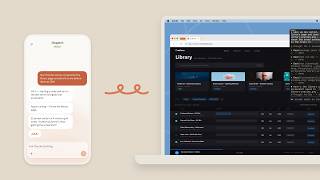
What is Claude Code?
Claude
Anthropic's new Claude Code tool signals a shift toward agentic AI that executes end-to-end tasks directly within a developer's terminal. By moving AI from the browser to the codebase, it functions less like a chatbot and more like an always-on junior developer, raising new considerations for security, budget management, and human oversight.
Key insight: Claude Code is not just generating snippets; it manages the full lifecycle of a task, including identifying bugs, applying fixes, and running verification tests until the job is complete.